
Halifax County Docket Lookup
Halifax County court docket records are kept by the Clerk of Superior Court in Halifax, North Carolina. The clerk handles all filings for both Superior Court and District Court. You can search Halifax County court docket entries online through the state eCourts portal or at the courthouse in Halifax. This page explains how to search for docket records, what information they contain, and how to request copies from the Halifax County clerk office.
Halifax County Clerk of Court
The Clerk of Superior Court is the official custodian of court records in Halifax County. Every new case starts with a filing at this office. Staff assign docket numbers, log entries, and store all documents. The office also handles probate, estates, and special proceedings.
Halifax is the county seat. The courthouse is in the town center. Halifax County is a rural county in northeastern North Carolina with a long history. The Roanoke River runs through the county. Court sessions cover a range of civil and criminal matters each term. The clerk office serves walk-in visitors during regular business hours and takes phone and mail requests as well.
The Halifax County court page on the NC Judicial Branch site shows locations and contact details.
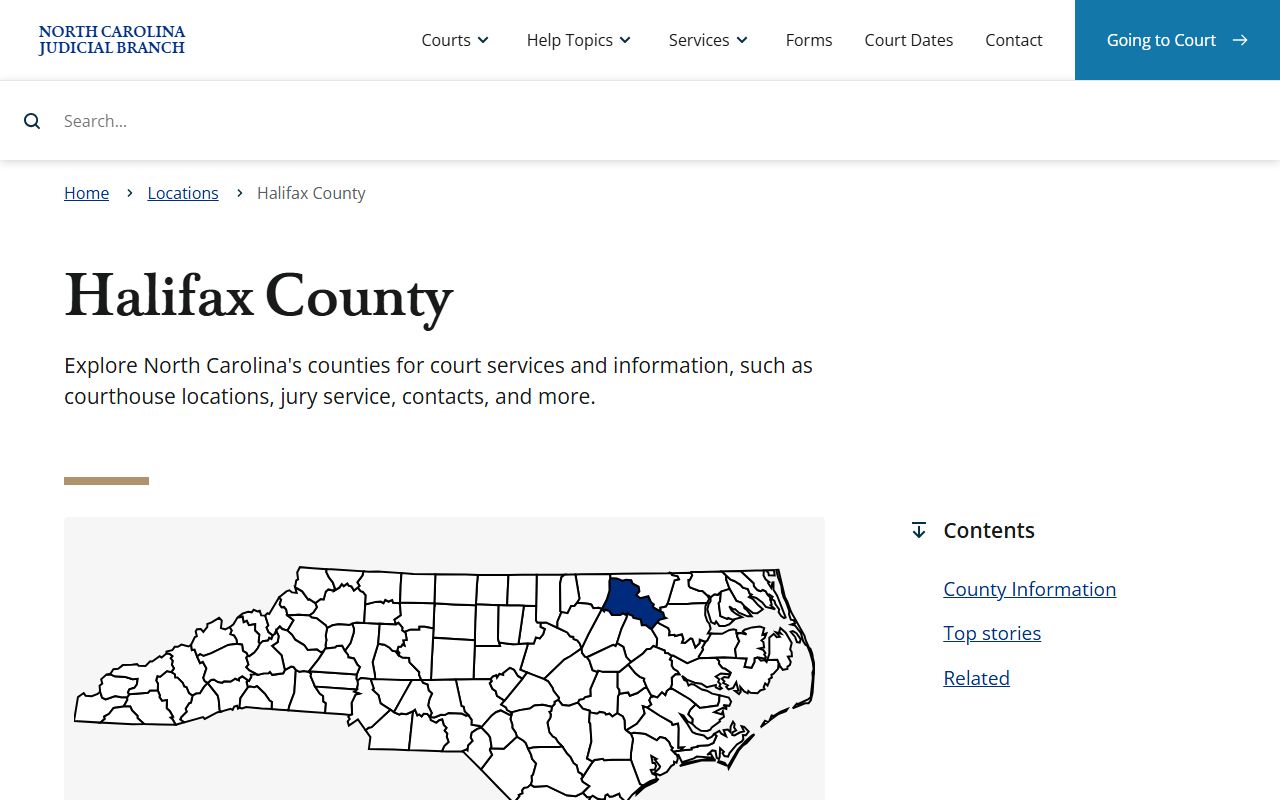
Check this page for court calendars, local rules, and directions to the Halifax County courthouse.
| Court |
Halifax County Clerk of Superior Court Halifax, NC |
|---|---|
| Hours | Monday through Friday, 8:00 AM to 5:00 PM |
| Website | nccourts.gov/locations/halifax-county |
How to Search Halifax County Court Docket
Online searches are the quickest way to check Halifax County court docket records. The North Carolina eCourts Portal offers free access to case data across the state. Search by name, case number, or citation. Results show docket entries, hearing dates, and case status for Halifax County.
Halifax County has a smaller caseload than urban counties. Searches tend to return fewer results, which makes it easier to find the right case. The portal covers civil, criminal, traffic, and family matters. For older records that may not be digitized, call the Halifax County clerk. The NC Court Dates page lets you look up upcoming hearings in Halifax County.
The Halifax County contact directory lists phone numbers for court offices and staff.
Use these numbers to reach the clerk, district attorney, or judges in Halifax County.
To search in person, go to the courthouse in Halifax. Staff can look up records and pull case files for you to review. No appointment is needed during regular hours.
Note: The eCourts Portal is a summary tool and may not show every document in a Halifax County case file.
Court Docket Record Types in Halifax County
Halifax County court docket records cover all types of cases heard in Superior Court and District Court. Each case creates a docket log that tracks every step from filing to final judgment.
Civil docket entries include lawsuits, small claims, foreclosures, and estate matters. Family cases such as divorce, custody, and domestic violence orders also produce docket records. On the criminal side, docket entries track charges, bonds, arraignments, trials, and sentencing. Halifax County misdemeanors go through District Court. Felonies are heard in Superior Court.
Under N.C.G.S. Chapter 132, most court records are public. Sealed records, juvenile files, and expunged cases are the main exceptions in Halifax County. The clerk can tell you if a specific file has restricted access.
A typical Halifax County court docket entry includes the date of the action, a description of the filing or ruling, and the name of the judge or magistrate who signed it. For criminal cases, docket entries also show bond amounts, attorney assignments, and next court dates. Reading a docket sheet from top to bottom gives you a full timeline of the case. This makes court docket records one of the most useful tools for understanding how a case moved through the Halifax County court system.
Public Records Law and Halifax County Courts
State law protects your right to see court docket records. Under N.C.G.S. § 132-1, public records include any document created or received by a government agency during its official work. Court docket records in Halifax County qualify. The clerk must allow inspection during regular hours.
Residency is not a factor. Anyone can request Halifax County court records. Copies must be provided "as promptly as possible." Standard copies cost $0.25 per page. Certified copies are $3.00 for the first page and $0.25 for each additional page. A criminal record check is $25.00. The Halifax County government website has general county information. For court records, the NC Judicial Branch site and the eCourts portal are the best sources.
The Halifax County government page links to departments and local resources.
Visit this site for background on Halifax County government and community services.
Note: Under N.C.G.S. § 7A-109, the clerk must maintain all records, dockets, and indexes as the Administrative Office of the Courts prescribes.
Halifax County Court Docket Copy Fees
Fees for court docket copies in Halifax County follow the state rate schedule. Plain copies are $0.25 per page. Certified copies cost $3.00 for the first page and $0.25 for each added page. A criminal record check is $25.00.
The Halifax County clerk accepts cash, money orders, and certified checks. Credit and debit cards may be accepted with a processing fee. For mail requests, send a money order or certified check to the Halifax County Clerk of Superior Court in Halifax. Include the case name or number and a description of the documents you need. Allow time for processing and return mail. Viewing records at the courthouse is free. Fees apply only when you want printed or certified copies. If your request involves a large number of pages, the clerk may give you a cost estimate before making copies. The NC Courts forms page has standard request forms that can help with your Halifax County record inquiry.
Nearby Counties
Halifax County is in northeastern North Carolina. Court docket records are stored in the county where the case was filed. Search a neighboring county if the case started there.